Updated September 15, 2026 · Reviewed for pricing, product positioning and source accuracy
How to make Shopify products visible in AI search
AI shopping changes the shape of product discovery, but it does not remove the need for clean catalog data and accessible product pages. An AI system needs to understand what the product is, who it is for, its price, availability, variants, shipping and enough evidence to recommend it with confidence.
Quick answer: how do Shopify products become easier for AI search to understand?
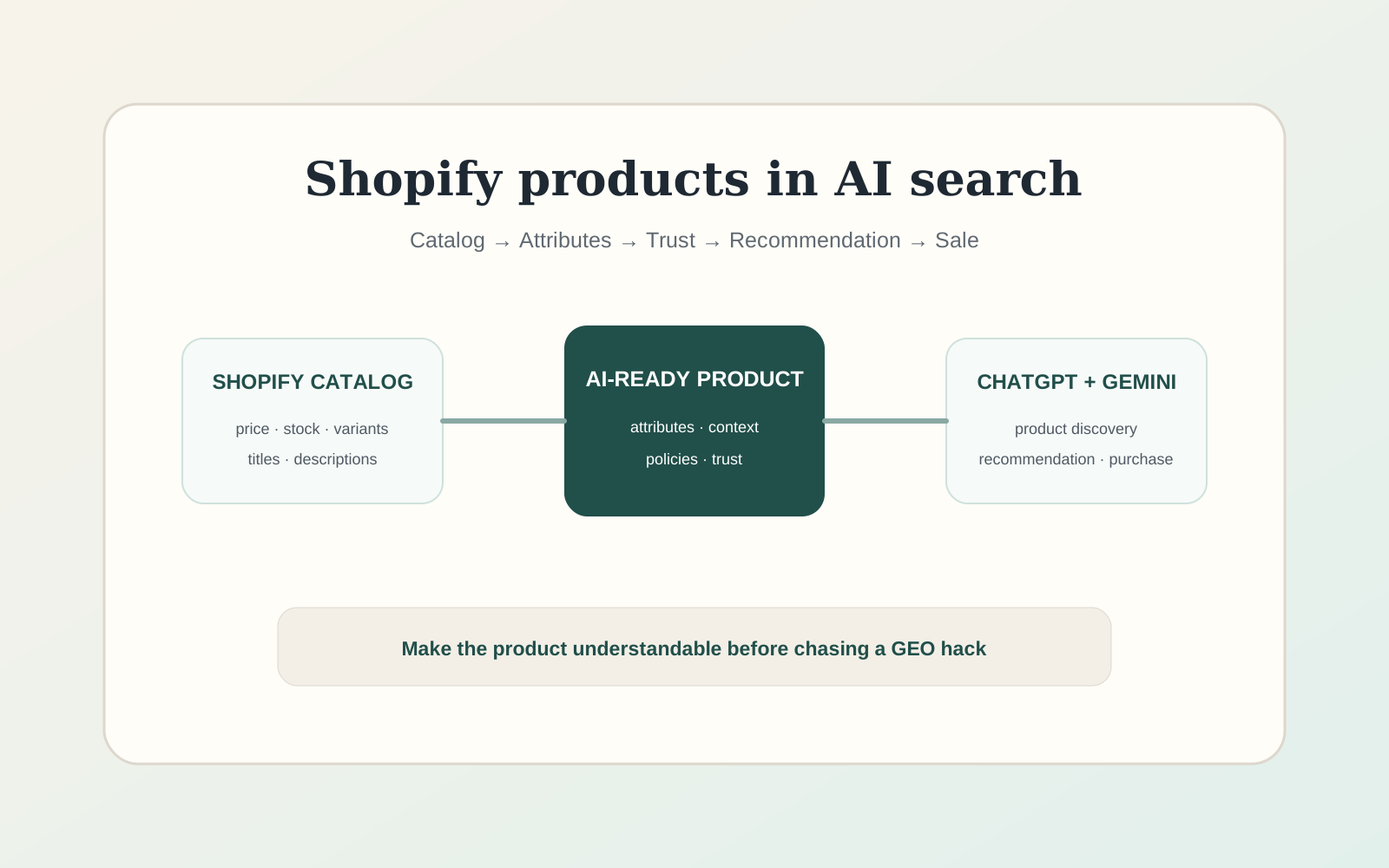
Start with clean product entities rather than “GEO copy.” AI shopping and answer systems need consistent facts: product name, brand, identifiers, price, availability, variants, category, shipping and a crawlable product page. Structured data and merchant feeds help, but they work best when the visible page and catalog data agree.
- Keep product facts consistent across page, structured data and feeds.
- Do not hide essential specifications only inside images or scripts.
- Write useful product copy for buyers first; structured facts make it easier to retrieve.
Why AI shopping changes product SEO
Traditional ecommerce SEO often focused on ranking a product or category page for a keyword. AI shopping experiences can instead assemble recommendations from structured catalog data, merchant feeds, indexed pages and other sources before sending the user to a store.
That means merchants should optimize the underlying product entity, not only a keyword paragraph. A model or shopping system needs consistent facts about the exact product and variant.
Start with product data quality
Use stable product titles, brand, identifiers, variant attributes, price, stock status and category information. Avoid putting essential facts only inside images or marketing banners.
Variant confusion is especially costly. If color, size, pack quantity or compatibility changes the item materially, keep those attributes explicit and consistent across the catalog and storefront.
Titles and descriptions should answer buying questions
A product title should identify the item clearly rather than read like a list of SEO synonyms. The description should explain the use case, important specifications, compatibility, materials and limitations that affect a purchase decision.
AI systems can summarize, but they cannot reliably infer facts that the merchant never publishes. If a product is only compatible with certain devices or has a specific return restriction, state it clearly.
Price, stock, shipping and returns are recommendation data
Product discovery is not only about relevance. Availability, delivery and return conditions affect whether a recommendation is useful. Keep commercial data current and avoid contradicting information between the product page, feed and policy pages.
For international stores, be especially careful with currency, delivery regions and taxes. A product can be technically relevant but practically unavailable to the user.
Reviews, Q&A and images add decision context
High-quality reviews and product questions can clarify fit, sizing, use cases and common objections. They should not be manufactured for GEO; their value is the additional first-hand context they provide to shoppers and retrieval systems.
Images should be descriptive and fast. Use meaningful alt text when it helps accessibility, but do not stuff it with keywords.
Crawling still matters
Even if Shopify introduces new AI-shopping channels, your public product pages remain important. Check indexability, canonical URLs, internal links and whether important product information appears in HTML.
Keep category and editorial content connected to products through useful internal links. A buying guide can explain context that does not belong in the product description itself.
Landing-page quality after the recommendation
Being surfaced by an AI system only creates an opportunity. The landing page still has to convert. This is where page-building and testing tools can help, but the page should preserve accurate product data and fast mobile performance.
Replo is one option for stores that need more design and experimentation control. Smaller stores may be better served by keeping the native theme simple.
Product-feed consistency audit
Pick ten important products and compare every customer-facing fact across the Shopify admin, storefront, structured data, merchant feeds and any marketplace integrations. Product title, brand, SKU/GTIN, price, currency, availability, shipping and variant attributes should agree. Contradictions make automated product understanding harder and can also create ordinary merchant-feed errors.
Repeat the audit after promotions and stock changes. AI-shopping visibility is not a one-time content project because the commercial facts change continuously. The operational system that keeps feeds synchronized is often more important than rewriting another paragraph of copy.
For high-value products, also inspect the questions a buyer asks before purchasing. If compatibility, sizing, warranty or delivery time repeatedly appears in support tickets, make those answers explicit on the public product page. That information improves the page for humans and gives retrieval systems more reliable decision context.
International catalogs need another layer of QA. Translate attributes consistently, keep localized URLs and canonicals correct, and make sure the price and availability shown to a user match the market the page targets. AI systems can summarize a product accurately and still produce a bad recommendation if the cited page ships only to another country or displays a different currency and return policy.
Frequently asked questions
Can I force ChatGPT to show my Shopify products?
No. You can improve product data, accessibility and participation in supported merchant experiences, but you do not control individual AI recommendations.
Is product schema enough?
No. Structured data helps describe a page, but the catalog, merchant data, content quality and crawlability also matter.
Should I rewrite every product description for AI?
Rewrite only when the existing description fails to explain useful product facts. Clarity and completeness matter more than inserting AI-related keywords.
Sources and verification
Product capabilities and pricing can change. We prioritize first-party documentation for purchase-critical details and recommend checking the vendor before subscribing.