Updated September 15, 2026 · Reviewed for pricing, product positioning and source accuracy
PageFly vs GemPages: which Shopify page builder is better in 2026?
PageFly and GemPages solve the same broad problem — building Shopify pages without relying on the theme editor — but they are not identical products. The better choice depends on whether you prioritize a mature page-building ecosystem, faster campaign creation, AI-assisted workflows or conversion-focused features.
PageFly vs GemPages: the short answer
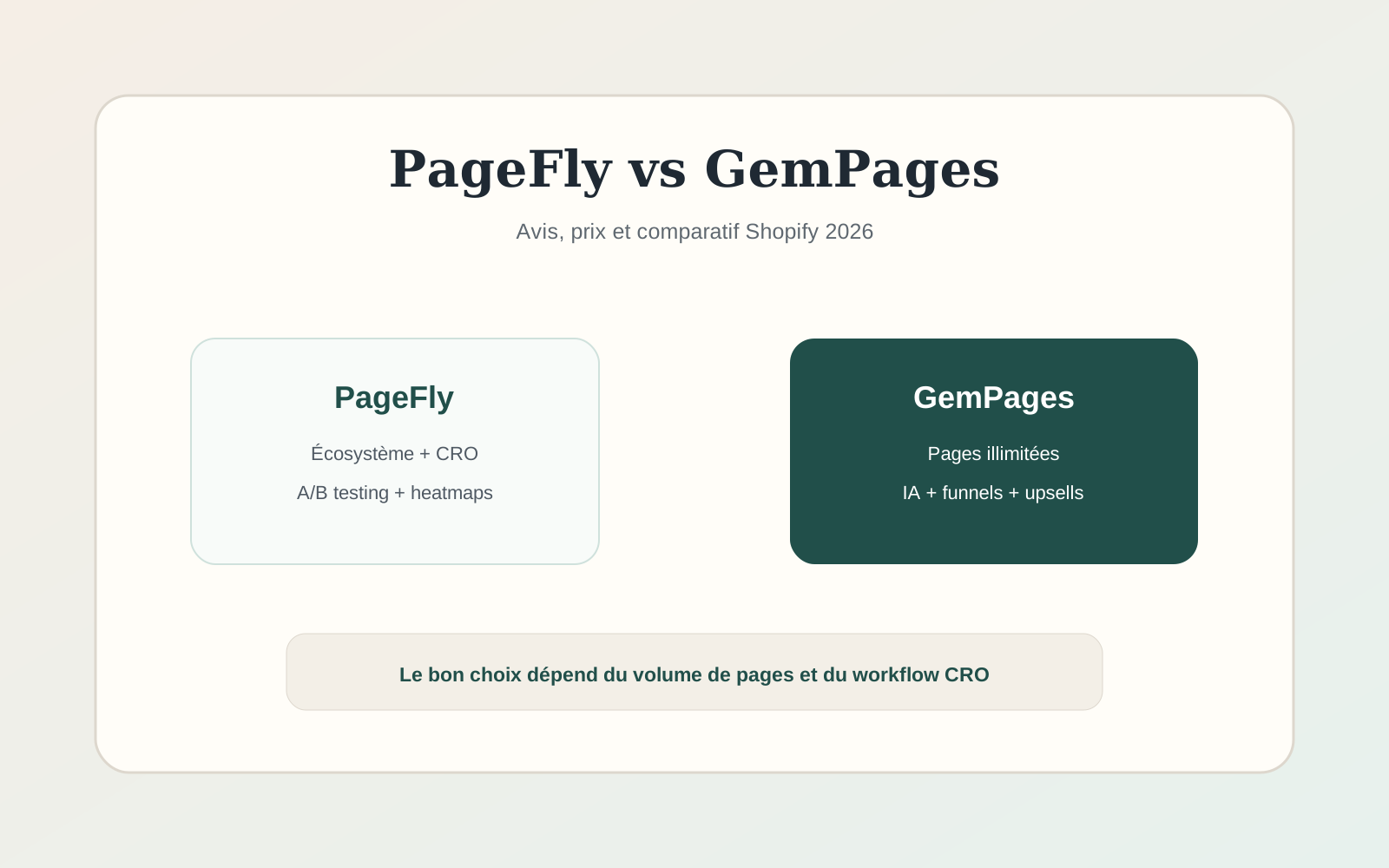
PageFly is the safer default when you want a mature Shopify page-building ecosystem across many page types. GemPages is attractive when speed of campaign and product-page creation matters more. Neither builder improves conversion automatically: the real result still depends on offer, page structure, speed, mobile execution and testing.
- PageFly: broad, mature visual-building workflow.
- GemPages: strong fit for fast campaign and product-page iteration.
- Consider Replo when design systems and experimentation justify a more premium workflow.
| Criterion | PageFly | GemPages | Replo |
|---|---|---|---|
| Core strength | Flexible Shopify page building | Landing pages and conversion workflow | High-end design and ecommerce experimentation |
| Ease for beginners | Good after a short learning curve | Generally campaign-friendly | Best for teams comfortable with a more advanced workflow |
| AI angle | Useful assistance, not the sole reason to buy | AI-supported page creation and workflow | AI plus design/system workflow |
| A/B testing | Depends on setup/integrations | Conversion-focused capabilities | A major reason to consider the platform |
| Budget profile | Accessible for many stores | Accessible to growth-focused stores | Higher-end investment |
PageFly or GemPages: the decision in 30 seconds
If your main need is to build many Shopify page types with a mature ecosystem, PageFly is the safer default. If your priority is launching product and campaign landing pages quickly, GemPages can feel more direct. Neither tool automatically improves conversion simply because the page looks better; the offer, traffic quality and testing discipline still matter.
Replo sits slightly outside the entry-level comparison. It is worth considering when your team cares about design systems, rapid iteration and experimentation enough to justify a more premium workflow.
Ease of use and learning curve
Both PageFly and GemPages use visual editing, but “easy” depends on what you are trying to build. A simple hero, testimonials and product block can be assembled quickly in either. Complexity rises when you add responsive behavior, dynamic Shopify data, reusable sections and custom conversion logic.
For a beginner, the practical test is not how fast you can build the first desktop section. Test whether you can make the same section work on mobile, reuse it elsewhere, edit product data safely and hand the page to another person without breaking the layout.
Landing pages and product pages
GemPages is often attractive when the workflow revolves around ad landing pages, product launches and direct-response style pages. PageFly is strong when a store needs a broader catalog of page types and a familiar Shopify page-builder ecosystem.
The best builder is the one that keeps product information, variant behavior, cart actions and analytics intact while still giving marketing enough freedom to change the story around the product.
AI workflows in 2026
AI page generation can reduce blank-page friction, but it should not be the primary buying criterion. A generated page is only useful if the resulting structure is editable, responsive and consistent with your brand. Evaluate how the tool handles real product data rather than only demo prompts.
Use AI for first drafts, section ideas and copy variations. Keep human review for claims, pricing, legal text and product-specific details. The long-term value remains the page system and the team workflow, not the fact that a model can generate a layout.
Funnels, testing and optimization
Conversion teams eventually need more than page creation. They need a way to compare variants, measure outcomes and avoid shipping changes that feel better but perform worse. This is where Replo becomes relevant for a more advanced ecommerce operation.
If A/B testing is central to your process, verify the exact testing capability, traffic allocation, analytics integration and plan restrictions rather than assuming every “optimization” feature is equivalent.
SEO, speed and responsive design
Page builders add flexibility but can also add complexity. Check Core Web Vitals on real pages, not only vendor demos. Compress images, avoid unnecessary animation, limit third-party scripts and verify that important copy appears in crawlable HTML.
SEO is not a property of the builder alone. The final page needs a clear title, useful content, internal links, canonical behavior and a mobile experience that does not become an oversized stack of desktop components.
Which one should you choose?
- Choose PageFly if you want a proven all-purpose Shopify builder and broad ecosystem.
- Choose GemPages if fast campaign and product landing-page production is the priority.
- Consider Replo if design quality, reusable systems and experimentation are core to your growth process.
- Keep the native Shopify theme editor if your needs are simple. Adding a page builder creates another layer to maintain.
Frequently asked questions
Is PageFly better than GemPages?
Neither is universally better. PageFly is a strong all-purpose choice; GemPages can be more appealing for campaign-driven landing-page workflows.
Is Replo better than PageFly or GemPages?
Replo can be better for design and experimentation-heavy ecommerce teams, but it may be more than a small store needs.
Do page builders hurt Shopify SEO?
They can if pages become slow, bloated or poorly structured, but the outcome depends on the page implementation, content and scripts rather than the brand name of the builder alone.
Sources and verification
Product capabilities and pricing can change. We prioritize first-party documentation for purchase-critical details and recommend checking the vendor before subscribing.