Updated September 15, 2026 · Reviewed for pricing, product positioning and source accuracy
How to make your newsletter visible in AI search
Email delivery and AI visibility are separate systems. A great newsletter can have thousands of readers while being almost invisible to search and AI engines if its best content only exists inside inboxes or thin archive pages.
Quick answer: how do you make a newsletter visible in AI search?
Make the newsletter’s valuable content available as high-quality public web pages. Email delivery alone does not create search or AI visibility. Each durable issue should have a crawlable archive URL, descriptive title, useful headings, enough context to stand alone and internal links from the rest of the site. Keep thin housekeeping issues out of the index when they add little long-term value.
- Treat the public archive as a content site, not a mailbox mirror.
- Give each durable issue a stable URL and standalone context.
- Link related issues so crawlers and readers can understand the topic cluster.
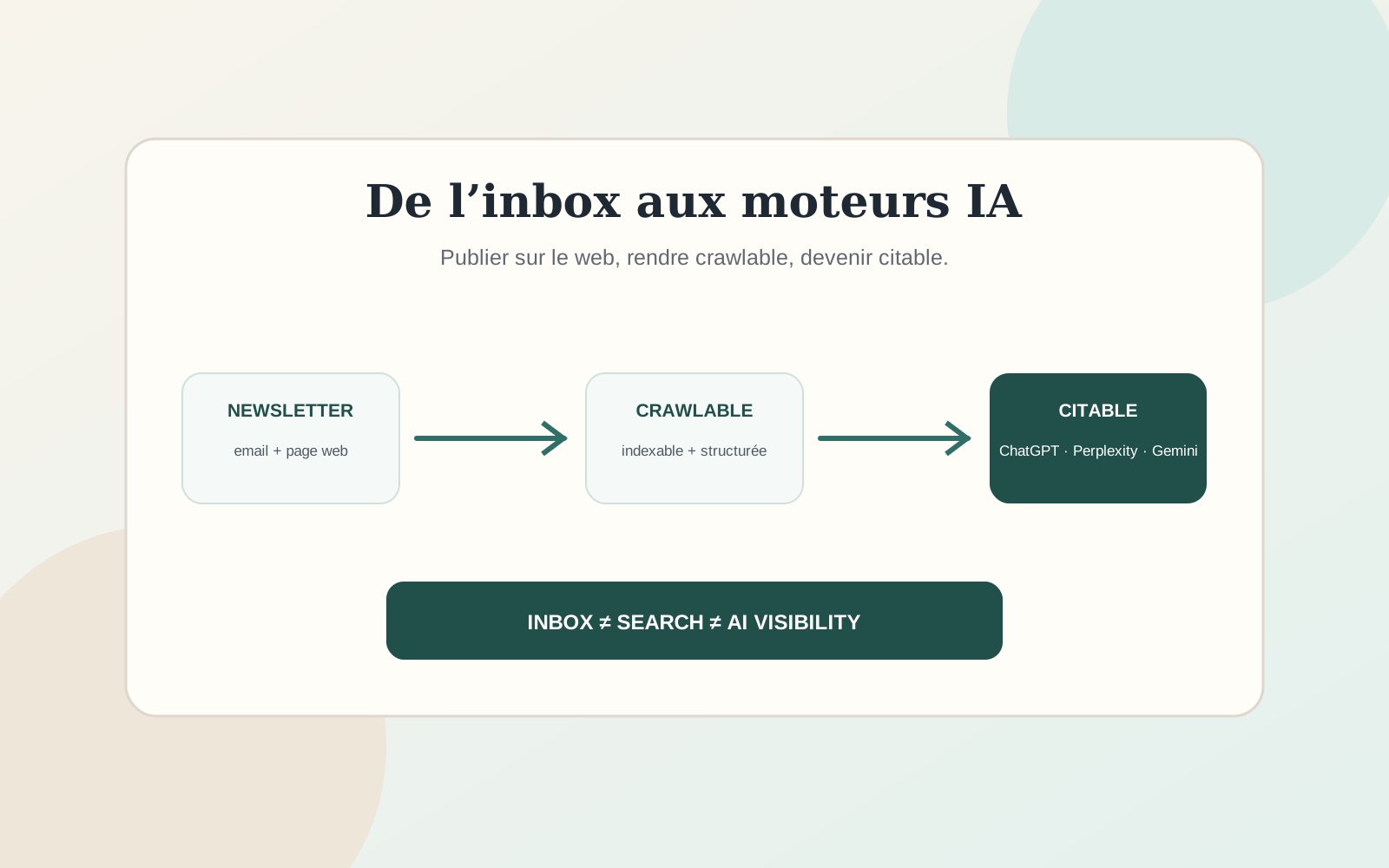
Email, web archive and AI visibility are different
An email is delivered to a subscriber’s inbox. A web archive is a public document that crawlers can fetch. AI visibility depends largely on the second layer, not the fact that an email was successfully sent.
This sounds obvious, but many newsletter operators optimize subject lines and delivery while leaving the public archive with thin excerpts, duplicate pages or poor internal linking.
Publish web versions with standalone value
An issue that deserves search visibility should make sense to someone who did not receive the email. Give it a descriptive title, a clear introduction, useful headings and enough context to answer the question independently.
Do not index every housekeeping message, promotion or repetitive issue. Search quality improves when the public archive contains durable editorial value rather than every send by default.
Make the archive technically discoverable
Check robots.txt, noindex directives, canonical tags and whether issue pages are linked from an archive or topic hub. A page that exists but is orphaned may be difficult to discover.
If the newsletter platform supports custom domains, consider whether the archive belongs on a domain you control and can maintain over time.
Write passages that are easy to cite
Newsletter writing can be highly personal, which is often a strength. For AI retrieval, add clear factual or analytical blocks when the issue makes an important claim: define the concept, explain the evidence and link to primary sources.
Original reporting, proprietary data and first-hand testing give a newsletter a stronger reason to be cited than generic commentary.
Evergreen pages and dated issues can work together
Dated issues are useful records, but an evergreen guide can consolidate recurring knowledge. Link important issues into the evergreen page and update the evergreen page when the underlying answer changes.
This prevents ten newsletter issues from competing for the same broad query while preserving the original chronology.
Beehiiv, Substack and platform choice
Both platforms can publish web versions, but visibility depends on how you configure and use them. Check public archive settings, custom-domain options, canonical behavior and how much control you have over the website experience.
If the newsletter is becoming a media business, website and SEO control may deserve more weight in the platform decision.
Measure newsletter AI visibility separately
Track web search impressions, AI citations and referral traffic independently from email opens. An issue can be a strong email performer and weak search asset — or the reverse.
Use a small stable prompt panel around your core topics to see whether AI systems cite the publication, the web archive or competing sources.
A newsletter-to-web publishing workflow that avoids duplicate clutter
A practical workflow is to classify each email before publication. Transactional or highly time-sensitive sends can stay email-only. Durable analysis can be published as a full web issue. Repeated themes can be summarized into an evergreen hub that links back to the strongest issues. This keeps the public archive useful rather than turning it into a chronological dump.
When the same idea appears in several places, decide which URL should be the long-term reference. Update and internally link that page instead of publishing a new near-duplicate every month. This matters for normal SEO and for AI retrieval because a clear canonical source is easier to interpret than several lightly different versions.
Finally, preserve newsletter personality. GEO does not require turning every issue into an encyclopedia entry. Add sourceable blocks where they help, but keep the editorial voice that gives the newsletter a reason to exist in the first place.
A good archive also needs navigation beyond a chronological list. Add topic pages, evergreen guides or internal links that help a reader — and a crawler — understand which issues belong together. When an edition updates or contradicts an older one, link the relationship explicitly. This creates a coherent body of knowledge instead of dozens of isolated URLs competing to explain the same subject.
Frequently asked questions
Can ChatGPT read my newsletter emails?
Not simply because they were delivered by email. Publicly accessible web versions are much easier for retrieval and search systems to discover.
Should every newsletter issue be indexed?
No. Index durable issues with standalone value; repetitive or transactional sends do not necessarily deserve search visibility.
Is Beehiiv better than Substack for AI visibility?
Platform choice affects web control, but content quality, accessibility and source value still matter more than the brand name of the newsletter platform.
Sources and verification
Product capabilities and pricing can change. We prioritize first-party documentation for purchase-critical details and recommend checking the vendor before subscribing.
- Beehiiv newsletter visibility settings
- OpenAI — publishers and developers FAQ
- Perplexity crawlers
- Google Search Central — AI features