Updated September 15, 2026 · Reviewed for pricing, product positioning and source accuracy
How to measure your visibility in AI answer engines
AI visibility is not a single rank. A brand can be mentioned without being cited, cited without being recommended, or visible in one engine and absent from another. A useful measurement system separates those outcomes and repeats the same test over time.
Quick answer: how do you measure AI visibility?
Measure AI visibility as a set of separate signals: mention rate, citation rate, recommendation rate and referral traffic. Run a stable panel of prompts across ChatGPT, Perplexity, Gemini and Claude, record whether your brand appears and whether your site is cited, then repeat the same panel over time. Do not reduce everything to one opaque score if you need to know what actually improved.
- Keep a repeatable prompt set instead of testing random queries.
- Separate mentions from citations and recommendations.
- Track engines independently because visibility can differ sharply by platform.
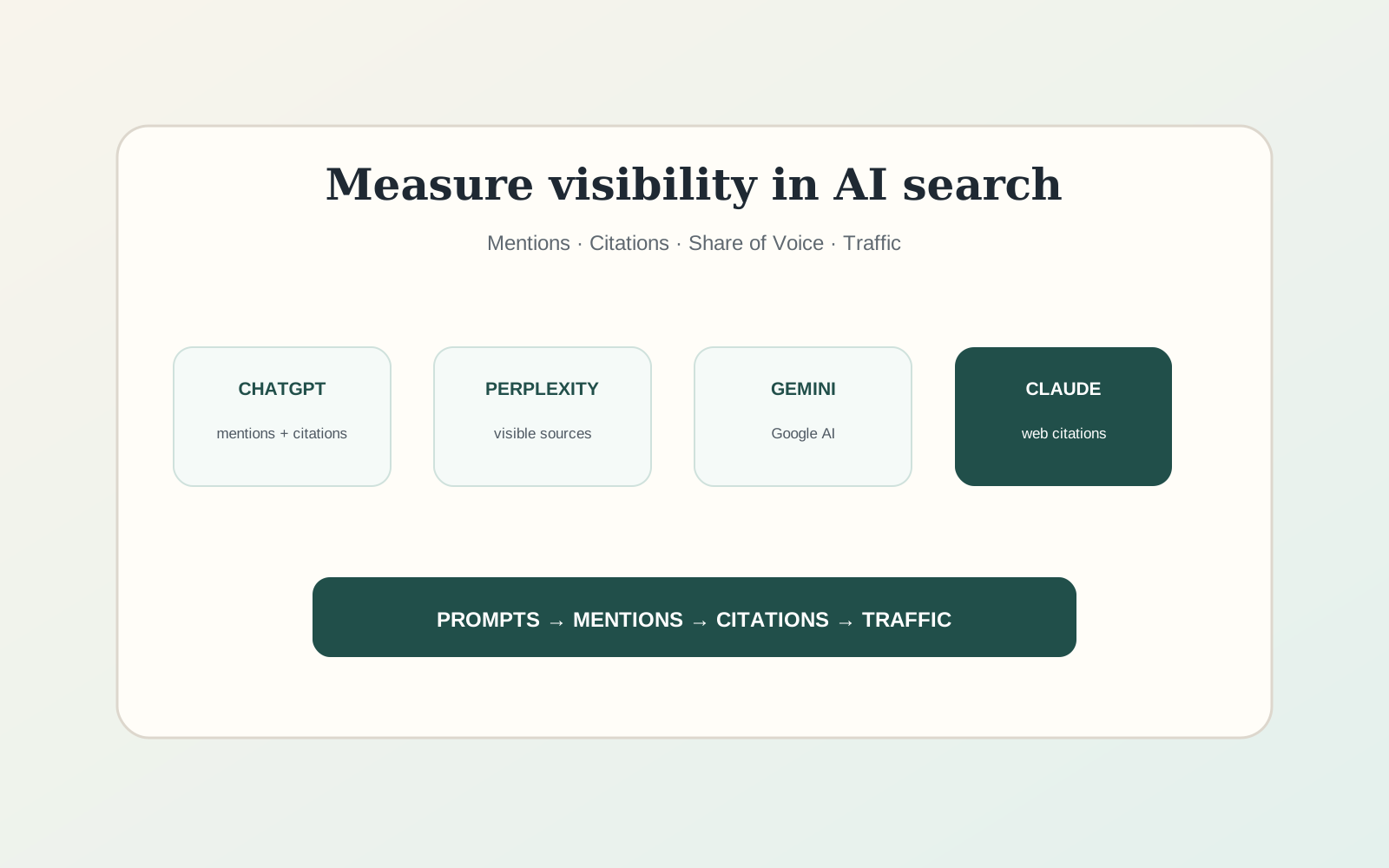
Visibility, citation, recommendation and click are different
A brand mention is not the same as a citation. A citation is not the same as a recommendation. And neither guarantees a click. Treat these as separate stages so a single proprietary “visibility score” does not hide what actually changed.
For example, a company may appear frequently in generated lists but receive few citations because the engine relies on third-party review sites. That suggests a different action than being completely absent from the answers.
Build a prompt panel you can repeat
Choose prompts that represent real discovery questions, comparisons and use cases. Keep the wording stable enough to compare results over time. A panel of 30 well-chosen prompts is usually more useful than hundreds of random questions that change every week.
Split the panel into branded prompts — where the user already knows your brand — and non-branded prompts where the engine has to discover and select you. Non-branded visibility is usually the more useful acquisition signal.
Why repeated tests matter
Generative systems are probabilistic and can change sources between runs. A single screenshot is evidence that an answer occurred, not a stable ranking position.
For important prompts, run repeated tests on a consistent cadence. Track the share of runs in which the brand is mentioned or cited. This turns stochastic output into a rate that can be compared over time.
Calculate mention rate and citation rate
Mention rate = number of tested answers that mention the brand divided by total answers tested. Citation rate = number of answers that cite your domain divided by total answers tested. Keep the denominator and test conditions consistent.
You can also calculate source share: count all cited domains in the panel, then measure how often your domain appears compared with competitors. This reveals who is actually supplying the information behind the answers.
Track each engine separately
ChatGPT, Perplexity, Gemini and Claude should not be merged into one undifferentiated score. They use different retrieval systems, source mixes and product experiences. A change that improves visibility in Google-connected experiences may not have the same effect elsewhere.
Keep an engine-level dashboard first. If you later create a blended KPI, document the weighting rather than pretending the engines are interchangeable.
Measure AI referral traffic in analytics
Citation visibility becomes more valuable when it produces traffic or conversions. In GA4, create a reporting view for known AI referral domains and annotate changes in tracking as products evolve.
Not all AI-driven visits will be identifiable as referrals, so traffic is an incomplete metric. Use it alongside prompt-based observation rather than as the only measure.
What to automate and what to inspect manually
Automation is useful for running stable prompt sets, storing answers and calculating rates. Manual review is still necessary to understand why a competitor is cited, whether the answer is favorable and which source passage appears to support the response.
A platform can save substantial time, but preserve the raw prompt, answer and citation evidence whenever possible.
Build a baseline before you optimize anything
Do not start a GEO project by changing dozens of pages. First capture a baseline. Save the exact prompts, engine, date, location or account context when relevant, resulting answer, cited URLs and whether your brand appears. Without that baseline, it is impossible to tell whether a later visibility change came from your work or from the AI product itself.
Choose a small set of prompts tied to commercial or informational goals and assign them to themes. For example: category discovery, alternatives, product comparisons, problem-solving and branded research. This lets you diagnose whether you are absent from one stage of the buyer journey rather than simply reporting an average score.
After a content change, wait long enough for crawling and retrieval systems to refresh, then rerun the same panel. Record the raw evidence before interpreting the trend. This discipline is less exciting than a dashboard, but it is what makes AI visibility measurement defensible.
Frequently asked questions
What is a good AI visibility score?
There is no universal benchmark because prompt sets, industries and engines differ. Track your own rates over time and against relevant competitors.
How many prompts should I track?
Start with a focused panel that represents real discovery and buying questions. Quality and repeatability matter more than a very large random set.
Can GA4 show all traffic from ChatGPT and other AI tools?
No. Referral data is useful but incomplete. Combine analytics with prompt-based visibility measurement.
Sources and verification
Product capabilities and pricing can change. We prioritize first-party documentation for purchase-critical details and recommend checking the vendor before subscribing.