AI SaaS profitability calculator
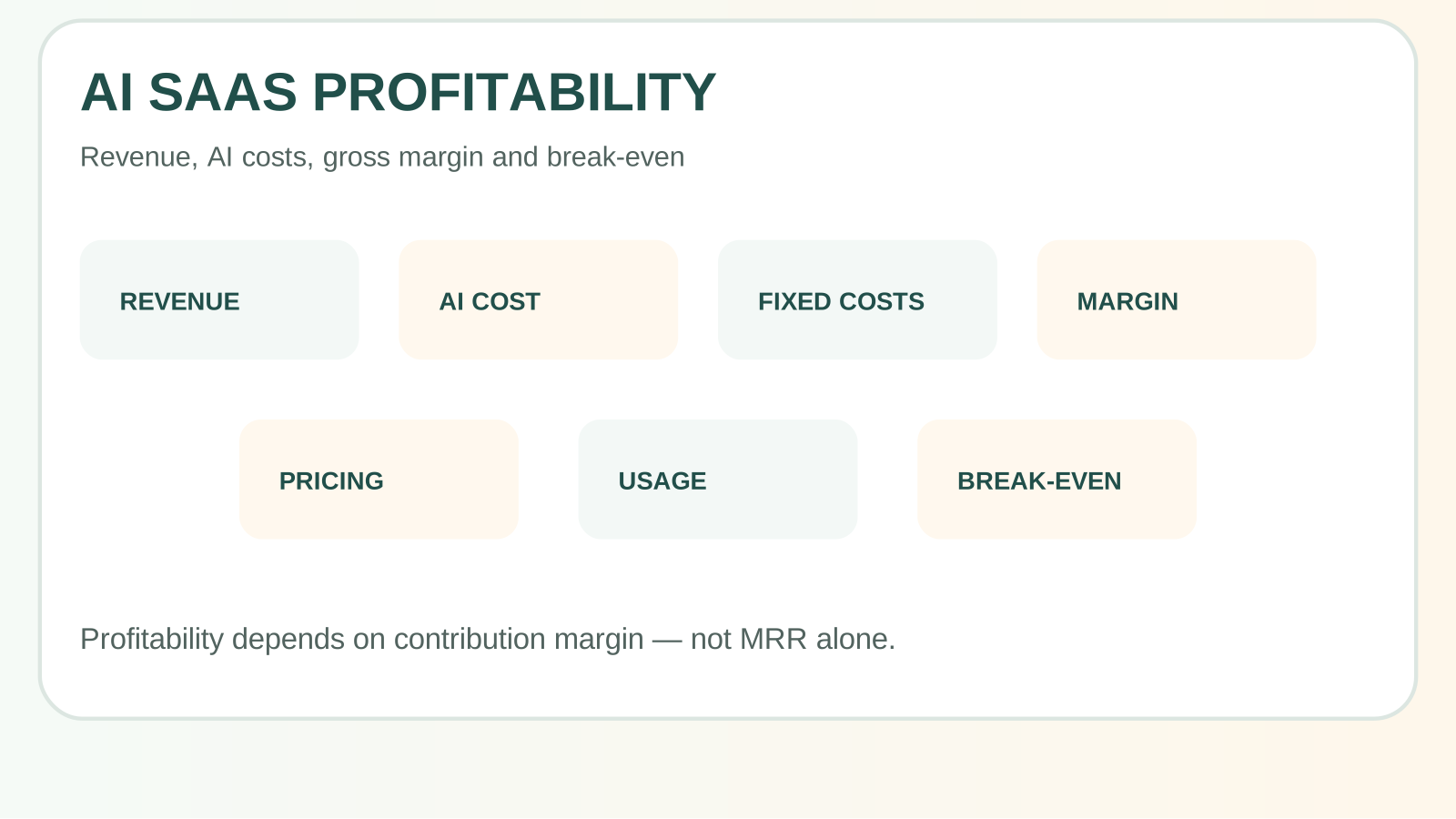
Model the economics of an AI product before revenue growth hides the cost of inference. Change the price, customer count, AI cost and fixed expenses to see how quickly the business reaches break-even.
Estimate monthly recurring revenue, gross margin, contribution per customer and break-even from a few operating assumptions.
Calculate your margin and break-even
How the calculator works
Contribution per customer = monthly price − AI cost − other variable costs. Gross margin % = contribution ÷ price. Break-even customers = fixed monthly costs ÷ contribution per customer.
This is a unit-economics model, not a sales forecast. It intentionally separates variable AI usage from fixed operating costs so that heavy users cannot hide inside top-line MRR.
Read the full guide: Is an AI SaaS still profitable in 2026?
How to use the result
The calculator is deliberately simple. Use it for sensitivity analysis, not as a forecast. Run at least three cases: expected usage, heavy usage and a downside case where AI cost rises or customers consume more than planned.
Contribution per customer
This is the amount left from one monthly subscription after AI and other variable costs. If contribution is negative, adding customers makes the operating loss worse before fixed costs are even considered.
Gross contribution margin
A high percentage creates room to pay for product development, support, sales and general operating costs. A lower margin is not automatically bad for a compute-heavy product, but it changes how much acquisition cost and service load the business can support.
Break-even customer count
The break-even output divides fixed monthly costs by contribution per customer. It is a useful operating checkpoint, but it does not include every cash-flow detail such as annual prepayments, taxes, financing or one-off development costs.
Test the power-user scenario
Do not enter only the average AI cost. Re-run the model with the cost of your 90th- or 95th-percentile user. If one heavy cohort becomes deeply unprofitable, consider credits, limits, plan segmentation or usage-based overages.